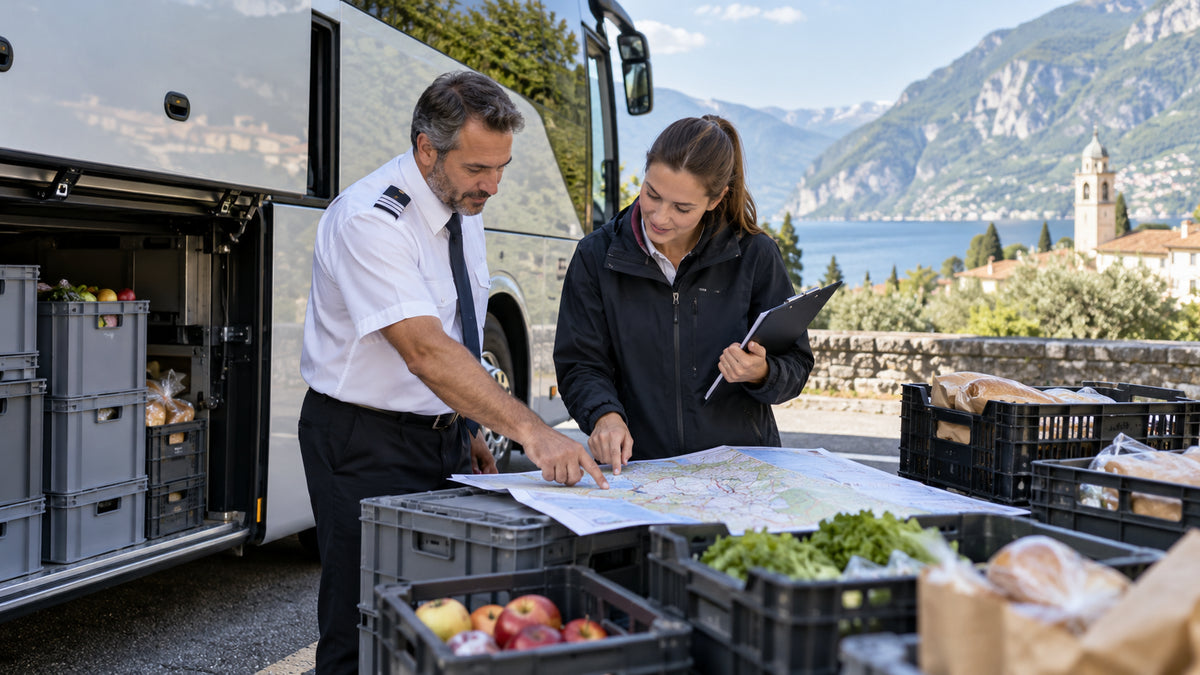
Drivers and group leaders see the itinerary from different angles. The leader manages participants while the driver understands access and timing. Meal delivery works best when both roles are involved.
Let the driver validate access
Before confirming a meeting point, ask whether the coach can stop there legally and safely. The driver may recommend a nearby coach park or hotel entrance.
Give one person authority
The supplier needs one operational contact. Decide whether the driver or leader will receive calls, accept the order and confirm the quantity.
Protect driving schedules
Delivery should not interfere with required breaks or departure times. Include loading and distribution in the timetable rather than treating them as instant tasks.
Share changes through one channel
If the coach is delayed, one authorised person should send the revised estimate. Conflicting messages from several participants create uncertainty.
Team coordination checklist
- Validated coach meeting point
- Named delivery recipient
- Driver’s schedule considered
- Dietary packages assigned to a leader
Ti-Dej coordinates with the nominated contact to deliver group meals at the agreed accessible location.
Going Further
The driver understands legal stopping and driving-time constraints, while the group leader manages passengers and dietary information. Both should review the meal plan before the day begins, with one person designated as the supplier’s contact.
Realistic Scenario
During a cross-city transfer, the driver rejects an inaccessible landmark and proposes an authorised coach bay five minutes away. The leader updates the delivery sheet and the handover occurs without blocking traffic.
Frequently Asked Questions
Who chooses the final meeting point?
It should be agreed by the organiser, driver and supplier.
Can the driver distribute the meals?
That depends on the operator; distribution usually remains the group leader’s responsibility.
What if the driver changes?
Send the new contact details as soon as they are known.
What to Remember
Clear information and early planning protect the group’s itinerary. Ti-Dej checks feasibility before confirmation so the proposed delivery remains realistic.
How to Prepare the Request Step by Step
- Review the itinerary: identify timed visits, transfers and the real amount of time available for eating.
- Count everyone: participants, leaders, guides and drivers must all be included.
- Consolidate dietary needs: use one final list and distinguish allergies, dietary practices and preferences.
- Verify the location: provide a complete address, exact entrance and confirmation that the coach can stop.
- Name one coordinator: this person receives calls, checks quantities and manages distribution.
- Confirm in writing: review the final summary before production begins.
For “A Meal Planning Guide for Coach Drivers and Group Leaders”, this process turns a general request into an operational order. It reduces conflicting messages and gives the supplier enough information to confirm what can realistically be delivered.
Why This Preparation Improves the Trip
A well-planned handover protects the rest of the itinerary. The group avoids unnecessary waiting, detours and the difficult search for restaurant seating for dozens of people. Leaders also have a clear process for distributing dietary meals.
Early planning does not mean every detail must be final months ahead. The organiser can begin with an estimate and confirm the key information progressively according to the agreed timetable. The important point is to maintain one complete and up-to-date document.