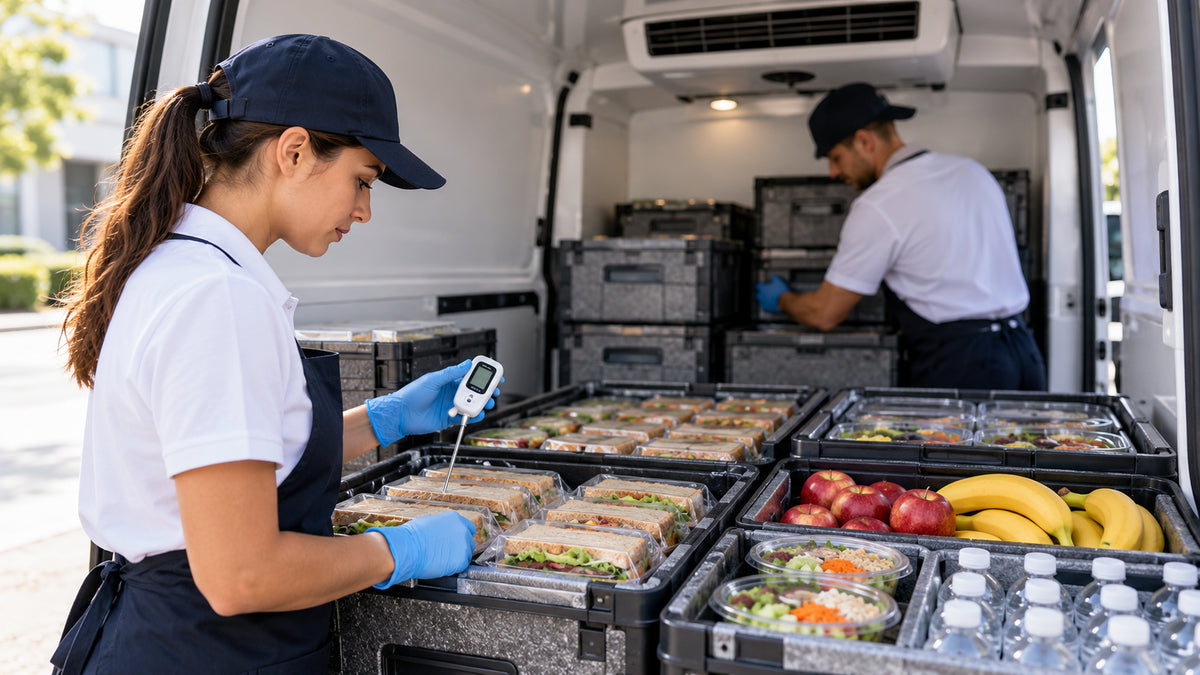
A packed meal may travel through several stages before it is eaten. Preparation, vehicle transport, handover and group distribution all matter, so organisers should plan the period after delivery as carefully as the order itself.
Choose an appropriate delivery time
Receiving meals too early can create unnecessary storage. Schedule delivery close enough to the intended eating period while leaving time for counting and distribution.
Protect packages after handover
Keep meals away from direct sunlight, heaters and unattended outdoor areas. The organiser becomes responsible for suitable handling once the order has been received.
Avoid opening packages in advance
Sealed individual packaging protects the contents and keeps categories identifiable. Open meals only when they are ready to be distributed.
Use clear operational instructions
Leaders should know when and where meals will be eaten, who holds special packages and how waste will be collected. A brief team reminder prevents improvised storage.
After-delivery checklist
- Count packages immediately
- Follow any storage guidance provided
- Keep dietary meals identified
- Distribute within the planned timeframe
Ti-Dej coordinates delivery timing with group organisers to support a practical and orderly handover.
Going Further
Food quality depends on the full chain from preparation to consumption. Delivery time should minimise unnecessary holding, and the organiser should provide a suitable area after handover. Sealed packaging must remain protected from heat, direct sun and contamination.
Realistic Scenario
A group receives meals at 11:45 for a 12:30 break. The leader counts the boxes immediately, keeps them in the agreed protected area and distributes them by 12:20 instead of leaving them on the pavement or coach dashboard.
Frequently Asked Questions
Can meals be delivered many hours early?
Timing should be assessed carefully to avoid unsuitable storage.
Who is responsible after handover?
The organiser is responsible for appropriate handling once delivery is accepted.
Should packaging remain closed?
Yes, until the meals are ready to be distributed.
What to Remember
Clear information and early planning protect the group’s itinerary. Ti-Dej checks feasibility before confirmation so the proposed delivery remains realistic.
How to Prepare the Request Step by Step
- Review the itinerary: identify timed visits, transfers and the real amount of time available for eating.
- Count everyone: participants, leaders, guides and drivers must all be included.
- Consolidate dietary needs: use one final list and distinguish allergies, dietary practices and preferences.
- Verify the location: provide a complete address, exact entrance and confirmation that the coach can stop.
- Name one coordinator: this person receives calls, checks quantities and manages distribution.
- Confirm in writing: review the final summary before production begins.
For “Freshness and Food Safety During Lunch Box Transportation”, this process turns a general request into an operational order. It reduces conflicting messages and gives the supplier enough information to confirm what can realistically be delivered.
Why This Preparation Improves the Trip
A well-planned handover protects the rest of the itinerary. The group avoids unnecessary waiting, detours and the difficult search for restaurant seating for dozens of people. Leaders also have a clear process for distributing dietary meals.
Early planning does not mean every detail must be final months ahead. The organiser can begin with an estimate and confirm the key information progressively according to the agreed timetable. The important point is to maintain one complete and up-to-date document.