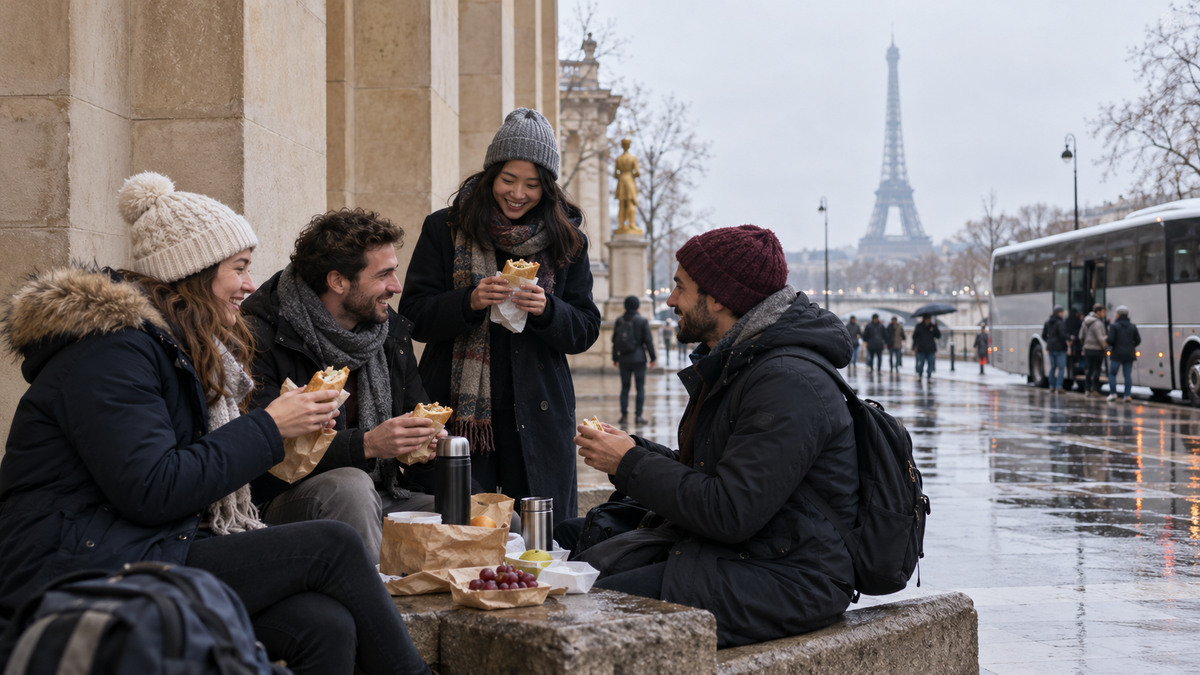
Winter changes the practical needs of a Paris group trip. Shorter daylight hours, cold weather and crowded indoor attractions make reliable meal timing especially important.
Use indoor-friendly timing
Plan lunch between major visits rather than during the busiest entrance period. If the group cannot eat outside, confirm an authorised sheltered option through the venue, hotel or itinerary planner.
Select easy-to-handle packaging
Cold hands and wet weather make complicated food service inconvenient. Individual, secure packages help leaders distribute meals quickly and keep the group together.
Allow for traffic variation
Rain and seasonal events can slow journeys. Avoid scheduling delivery too close to a timed admission and keep the on-site contact reachable.
Communicate weather-related changes
If the meeting point becomes unsuitable, contact the supplier early. A last-minute location switch across Paris may not be operationally possible.
Winter planning checklist
- Backup eating location
- Accurate coach or hotel address
- Dietary labels
- Waste collection plan
Ti-Dej supports winter group itineraries with scheduled delivery to an agreed accessible point.
Detailed Planning
Winter plans need a sheltered eating option, realistic travel times and packaging that remains practical in rain or cold. The organiser should also decide where participants will dispose of packaging, since public areas may have limited facilities during busy seasonal events.
Practical Case
A group completes a morning museum visit and receives meals at its hotel before an afternoon coach tour. This stable handover point avoids waiting outdoors and gives leaders time to check every package.
Frequently Asked Questions
Does cold weather replace food-handling rules?
No. Meals still need appropriate handling and should be eaten within the planned period.
Can the delivery point change because of rain?
Only if the alternative is communicated early and accepted.
What is the safest meeting point?
Usually a confirmed hotel entrance or authorised coach area.
Conclusion
For reliable delivery, consolidate the information, verify access and keep one nominated contact. Ti-Dej adapts its proposal to the route, volume and available lead time.
How to Prepare the Request Step by Step
- Review the itinerary: identify timed visits, transfers and the real amount of time available for eating.
- Count everyone: participants, leaders, guides and drivers must all be included.
- Consolidate dietary needs: use one final list and distinguish allergies, dietary practices and preferences.
- Verify the location: provide a complete address, exact entrance and confirmation that the coach can stop.
- Name one coordinator: this person receives calls, checks quantities and manages distribution.
- Confirm in writing: review the final summary before production begins.
For “Visiting Paris in Winter with a Group: How to Plan the Meals”, this process turns a general request into an operational order. It reduces conflicting messages and gives the supplier enough information to confirm what can realistically be delivered.
Why This Preparation Improves the Trip
A well-planned handover protects the rest of the itinerary. The group avoids unnecessary waiting, detours and the difficult search for restaurant seating for dozens of people. Leaders also have a clear process for distributing dietary meals.
Early planning does not mean every detail must be final months ahead. The organiser can begin with an estimate and confirm the key information progressively according to the agreed timetable. The important point is to maintain one complete and up-to-date document.